All Ex Members should now have received an email from the Secretary inviting them to our Online Gathering with all the details.

If you have not received your invite please contact the Secretary.
All Ex Members should now have received an email from the Secretary inviting them to our Online Gathering with all the details.
If you have not received your invite please contact the Secretary.
We would like to wish you and yours a Happy and Healthy New Year.

We hope you are all keeping well and hopefully we can all meet up in person, later in the year.
The Committee are currently investigating opportunities, that would allow Ex Members to have a safe catch up in March.
Keep watching this space.
Sure & Stedfast
I am sorry to announce that Robin Tedford passed away on Boxing Day, after a short illness at the age of 87.
Robin who lived in Prestwick was a well known 214 face over the years.
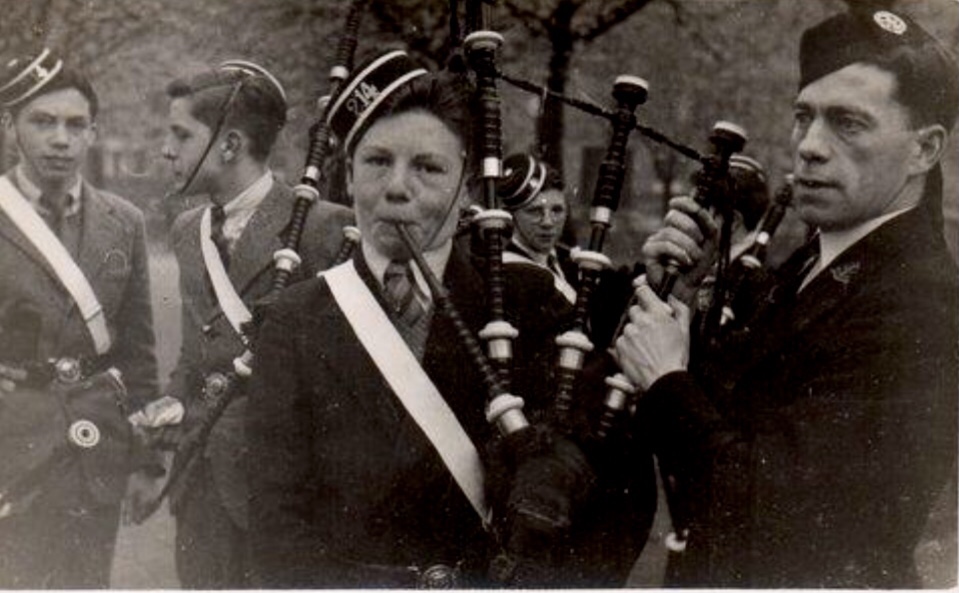
Robin was in the band during the WW2 years and was given the charge of looking after Donnie MacIver’s pipes while he was away during National Service.
After leaving the 214 Robin served in the Merchant Navy as an engineer for some years. He then became a draughtsman and project engineer during his later employment.
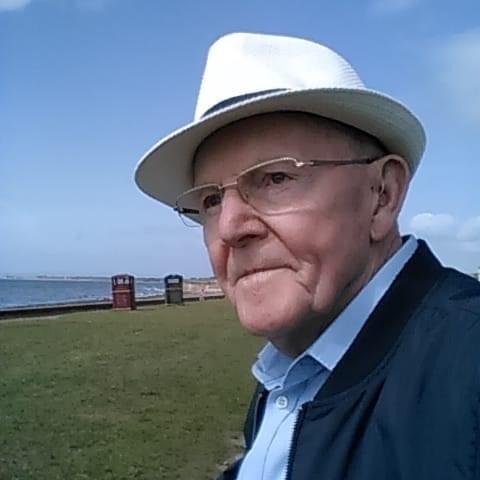
We all send our condolences to his wife of 59 years Margaret and all the rest of the family at this sad and difficult time.
Two new Photo Galleries have been added to the site find them under the Photos Tab.
or click these links
More detail is required to be added to some of the photos, if you have sent me details of these I thank you I just haven’t got round to marking them up yet.
I must thank Willie Ellis who spent many hours with me, going through these a while back.

If you know the order of the people in the photos email me the names in order and I’ll update when I can, please note the photo number that is in (Brackets).
I have many more photos to sort and put up in Galleries which takes time as you can imagine, there is no point putting up photos with no detail. Also as you can see a lot of the photos are not picture perfect and clear. Donnie MacIver who took most of these had loads of blurry pics so I need to try and edit them to clean them up.
The next priority project is the Christmas Cards, so if you moved home please make sure we have your up to date address.
Keep safe all.
As we fight our own war against a virus, remember all who never returned from all conflicts.
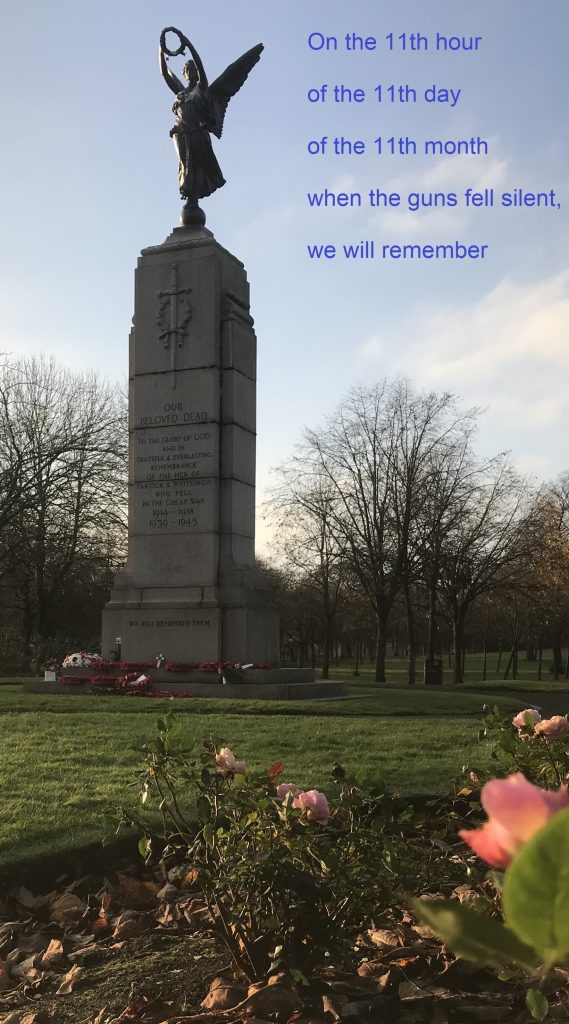
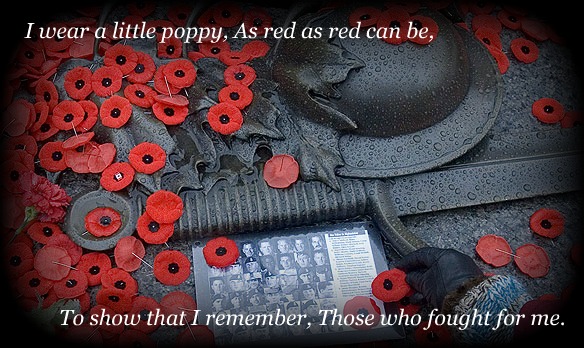
At the 11th hour we will remember those who gave the ultimate sacrifice.
We give our thanks to those who never came back, those who came back broken physically and mentally, and we thank those who continue to serve.
Lest we forget.
105 years ago, there was a cease-fire in the trenches of WW1, and soldiers on all sides found that they had more in common with their enemies than they realized…. As Christmas approaches, may we all be reminded to show love and warmth to our fellow men, and focus on the things that truly matter.
Angus as known by his family or as a lot of you will remember him, “Big Gus the Bass Drummer” was born in Alderney the third largest inhabited of the Channel Islands, (It is only 3 square miles), on the 26th August 1926.
Growing up on Alderney was a world away from life in Glasgow.
The German occupation of the Channel Islands was nearing and Gus at the age of 13 was evacuated on Sunday 23 June 1940. They arrived on the South coast of England and were placed onto trains to be sent across Great Britain for a safer life.
Gus along with his family and the other islanders, approximately 1500, were originally being sent to London, but there was a mix up with the trains and they all ended up in Glasgow.
Arriving in Glasgow the refugees were sent to various places to be allocated a place to stay, Gus was sent to Whiteinch and Gordon Park Church Hall.
It was there that he was to meet one of his life long friends Tom McColl (The Secretary’s father). Tom said that he saw Gus wearing this unusual belt, it had a big shiny Alderney Crest on it and he asked Gus about it, they were friends ever since that moment.
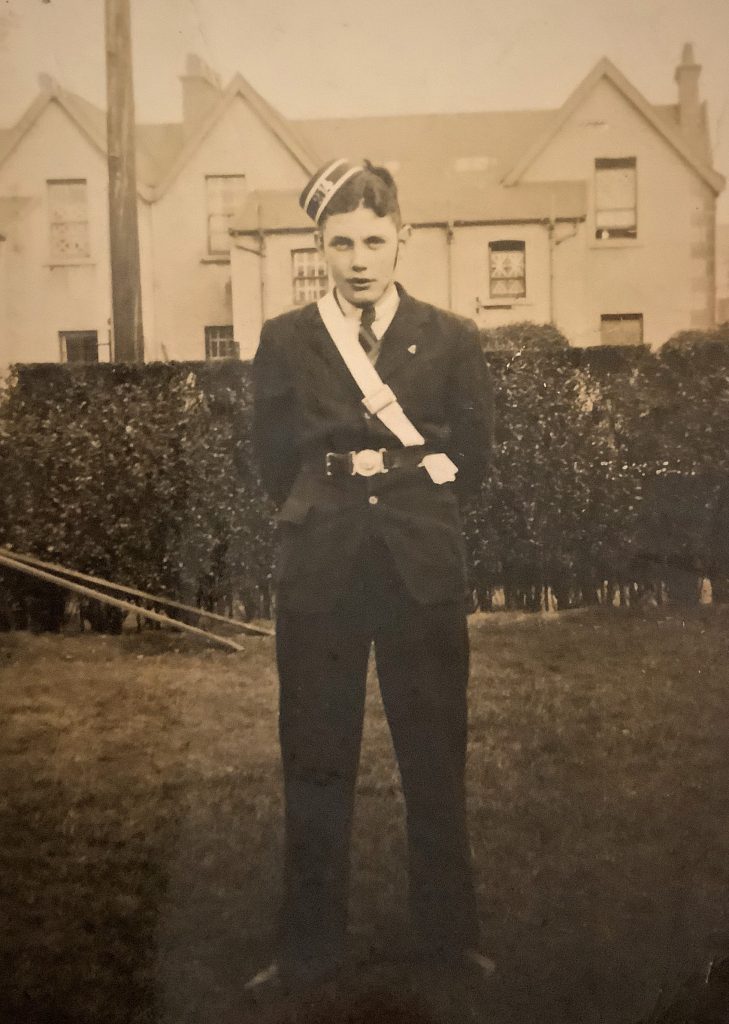
Needless to say Gus joined the 214 BB and that’s where a great friendship was also formed with Willie McDonald.
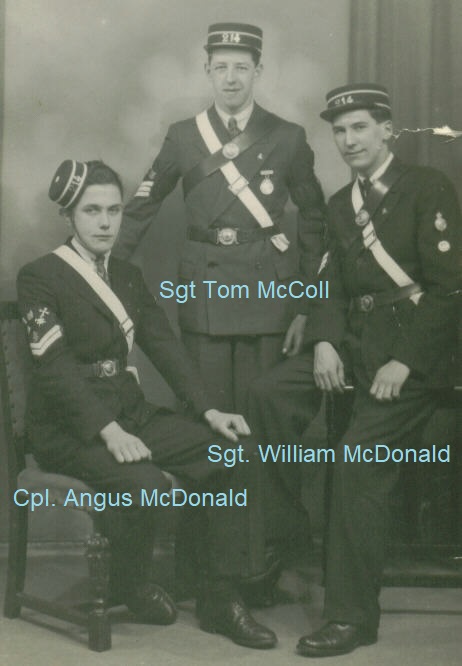
Gus, Tom and Willie (The Three Amigos) were all members of the ARP (Air Raid Precautions) part of the Home Guard Civil Defence. (As described in Tom McColl’s article ‘The War in Japan Part 3‘)
After leaving the BB Gus much to the horror of his Father and Grandfather, joined the ‘Red Coats’ The Scots Guards. (Up to this point the family had been in the Royal Artillery)
On the 15 March 1945 he joined the Scots Guards and was sent to Caterham, Surrey. Where he joined the 1st Battalion on 19 March 1945 as Drummer 2704401
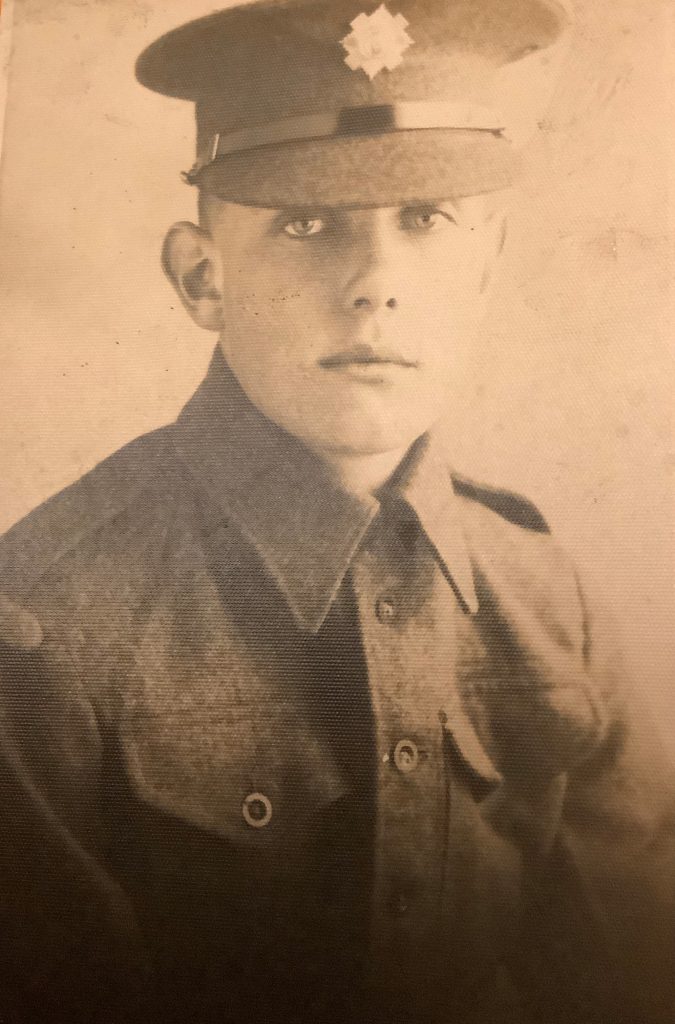
In May 1945 Gus was posted to Rossetti Barracks, Trieste in North East Italy.
Trieste in May 1945 was a chaotic city filled with cornered German, Croatian and Italian soldiers who continued to fight despite Italy’s capitulation in 1943.
The city was the focal point of a bitter territorial dispute between Italy and Yugoslavia. The Yugoslavs had hoped to strengthen their post-war claims to Trieste by being first to liberate it and then putting in place their own military administration.

The Western Allies, however, had planned that the city should come under Allied Military Government like other parts of liberated Italy, pending a final peace settlement.
For some weeks, Trieste was under an uneasy dual occupation. The problem was resolved diplomatically at the highest Allied levels, with the Yugoslavs reluctantly withdrawing from the city in mid-June.
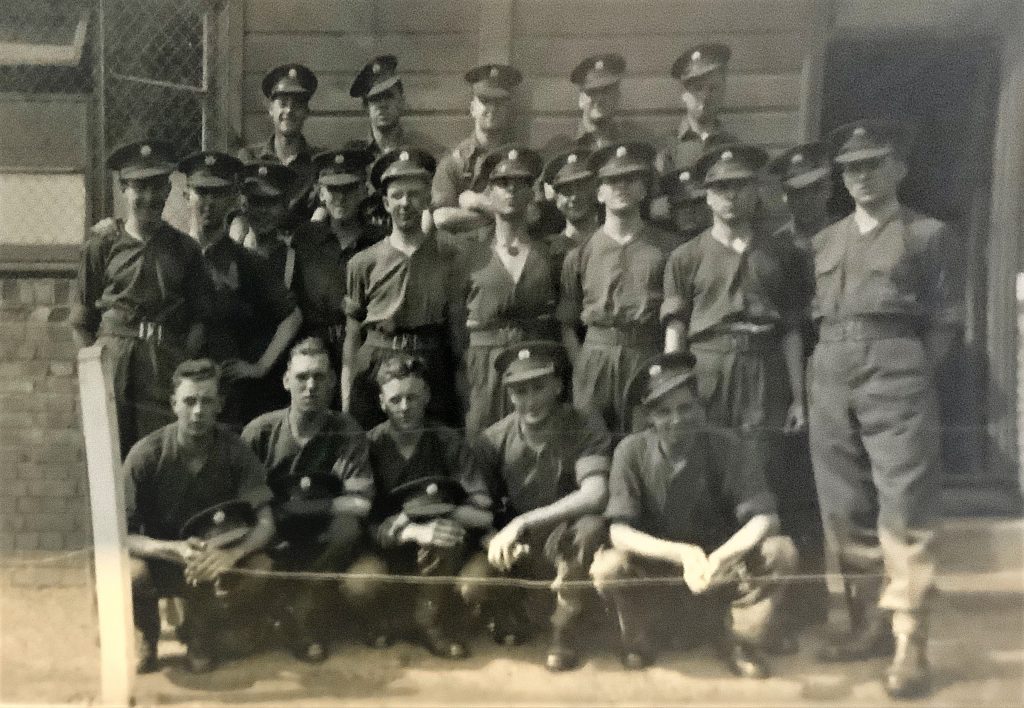
Gus enjoyed his time in Trieste, much of his time being spent on riot duty.
As well as being a drummer in the 1st Battalion Pipe Band, he was also a Battalion Buglar.
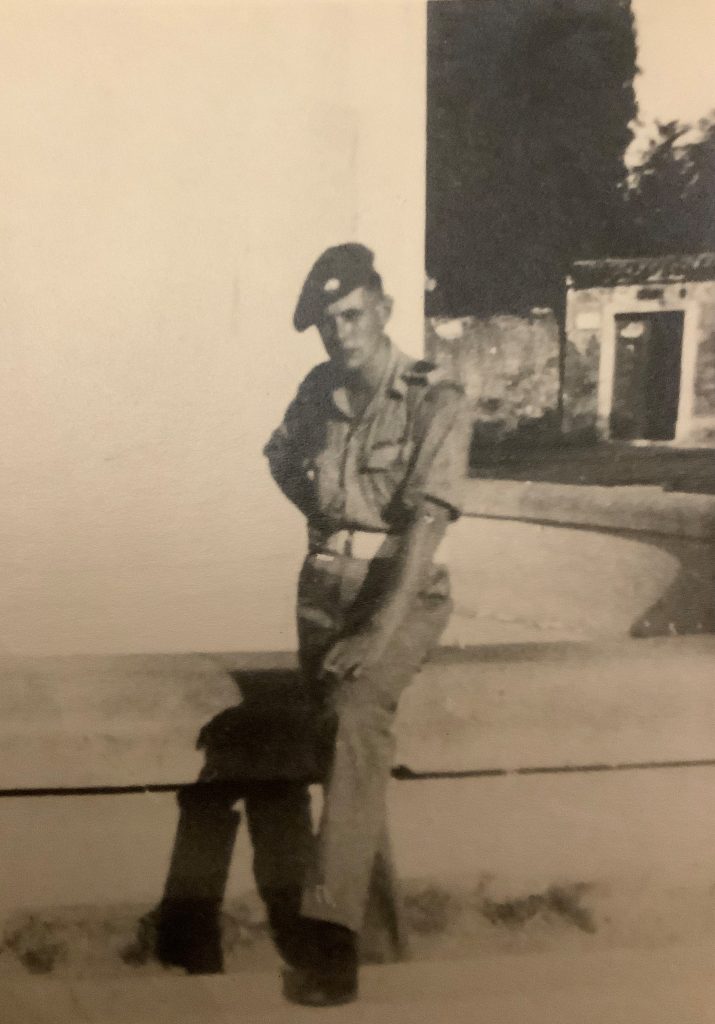
In October 1947 he was posted to Pirbright with duties in Chelsea Barracks, Buckingham Palace and the Tower of London.
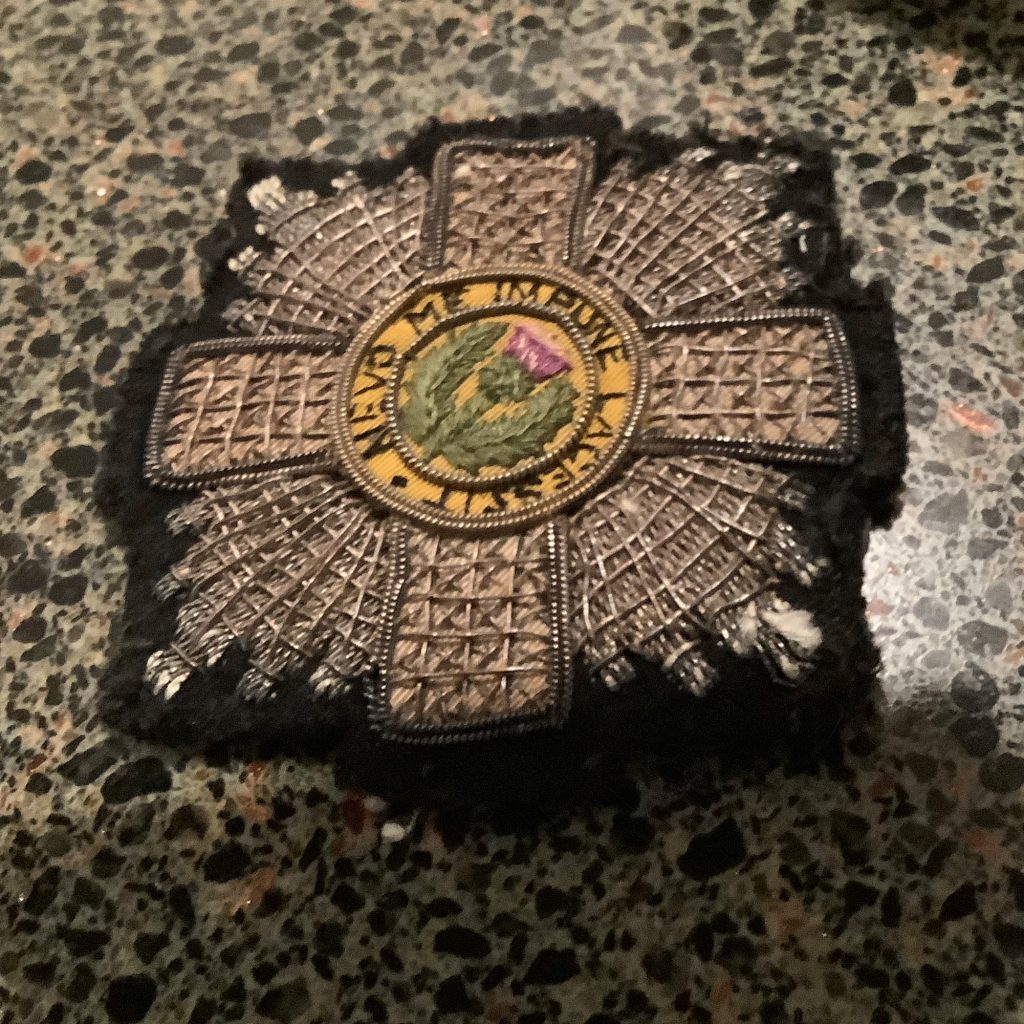
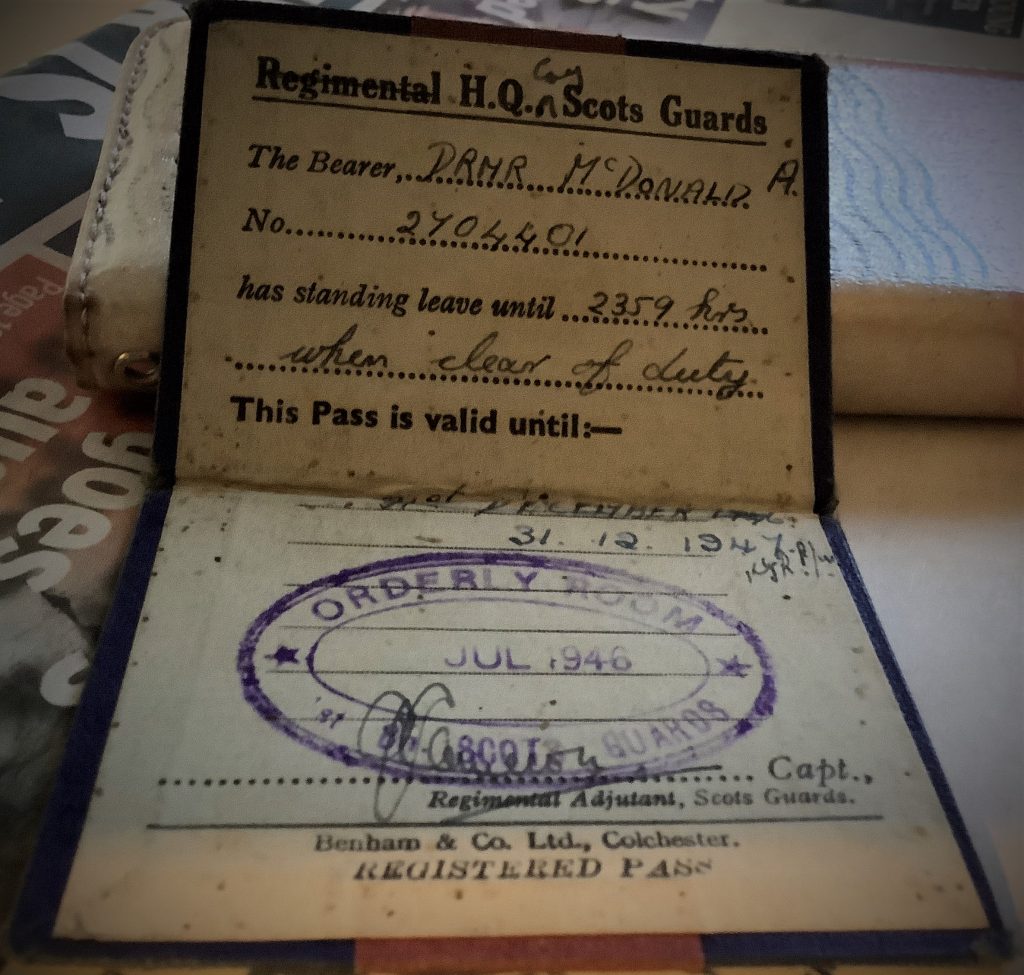
Although his family had returned to the Channel Islands at the end of the German occupation, on demob, Gus decided to remain in Glasgow.
Gordon Park had a lot to answer for, as it was through the church that he met his wife Grace via a friend Doreen Black. They were married by Rev Harry L Thomson in May 1951 and Tom McColl was their Best Man. They lived for a short time on Jersey where their daughter Grace was born in 1952. Living on a rural farm (and no doubt after just having a baby), had made Grace very homesick and later that year they decided to return to Glasgow.
On their return Grace took not well with TB and was hospitalised. Thankfully ‘Streptomycin’ had just been discovered as a wonder drug and she recovered. On her release from hospital they moved into their newly built house in Drumchapel, thereafter moving to Kingsway, closer to work and overlooked the Clyde from the 18th floor of their high rise flat.
Gus was Head Timekeeper at Charles Connell’s Shipyard in Scotstoun for many years and took no prisoners if a worker challenged his pay packet at the end of the week.
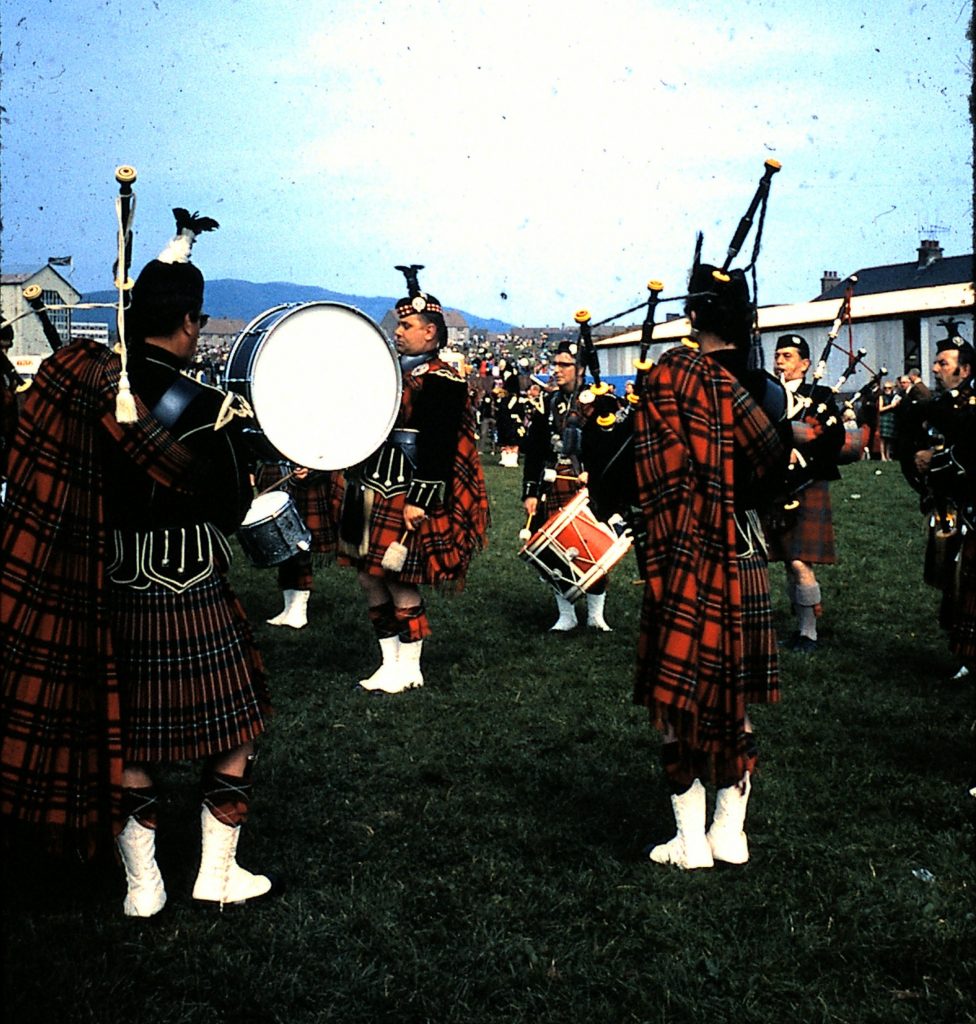
He played the Bass Drum in the Rutherglen Pipe Band, along with Alex MacIver and Willie McDonald as shown here at Cowal Games in 1972.
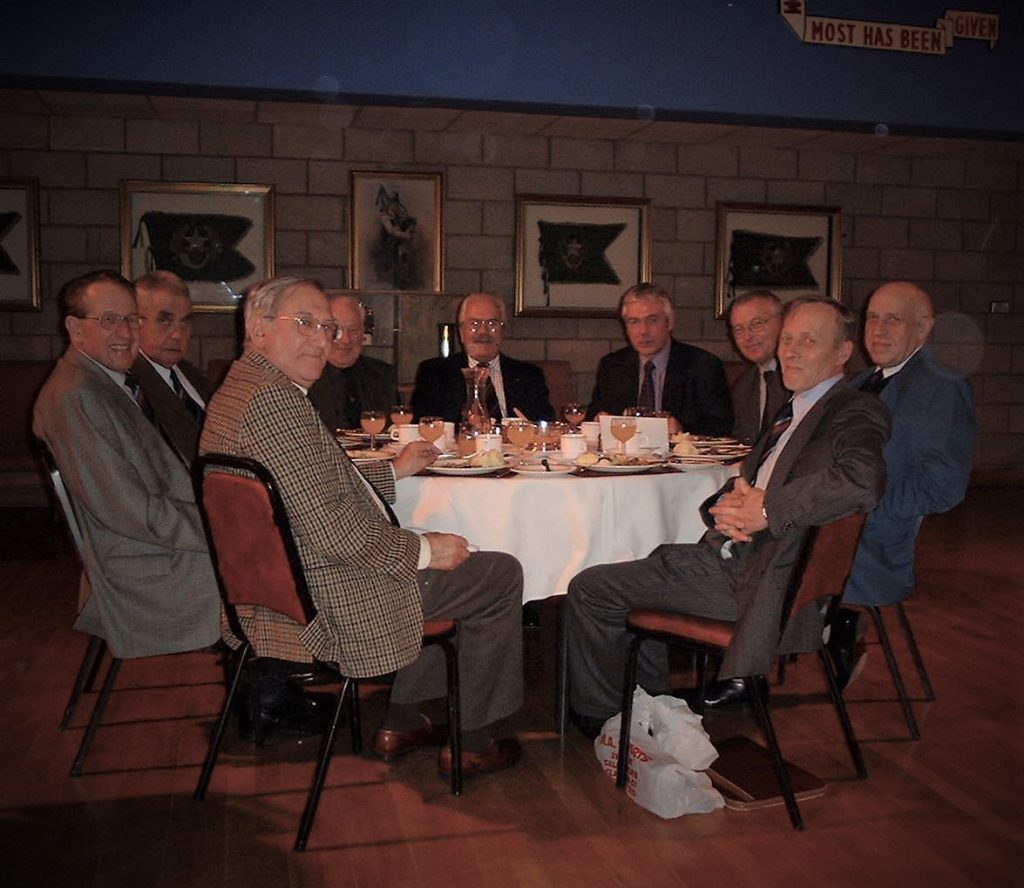
Gus was never a man for smiling in a photograph as can be seen here at the 2004 BB Reunion at the OTC in Glasgow University in 2004. The three Amigos are on the left Tom McColl, Gus McDonald and Willie McDonald.
Gus passed away on 7th April 2007 aged 80.
We would like to thank Gus’ daughter Grace for supplying the material for this post.
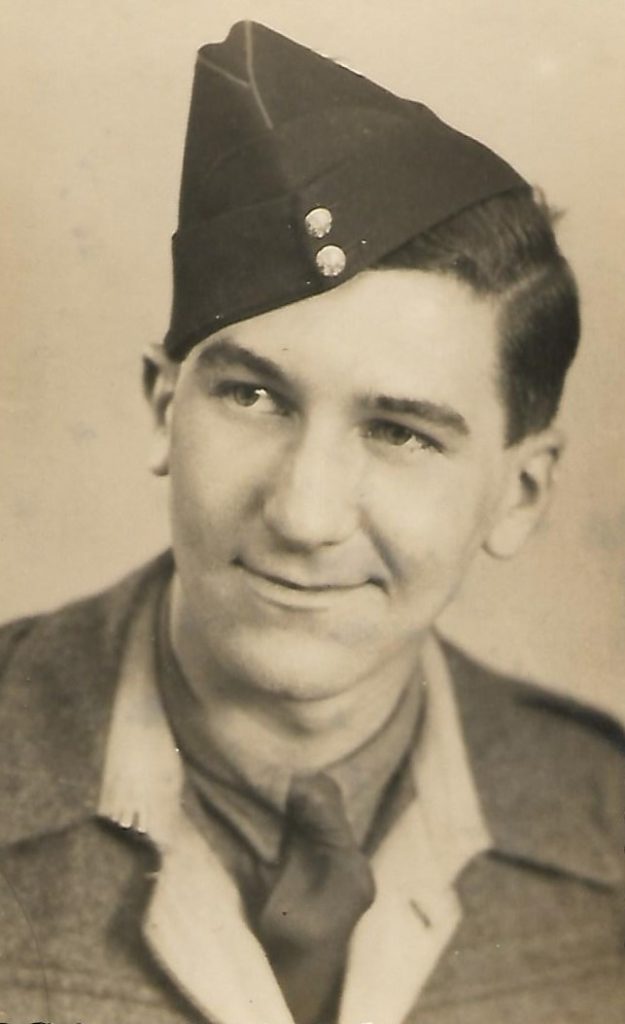
The following account is written by Willie’s daughter Eileen McDonald.
Willie now lives with her at home on the sea front in the Argyle and Bute town of Helensburgh, which is on The Firth of Clyde.
William “Willie” McDonald and his National Service with the Royal Engineers
Nowadays my father’s memory is, as he puts it himself, “blitzed”, a rather fitting expression from one who lived through the events of the Second World War on Clydeside. This means that this account of his National Service years has involved supplementing what he recalls with family recollections of memories he has shared in the past, plus some detective work. Amongst the memories are those kindly contributed by my aunt, Edith McDonald, my father’s younger sister.
To prevent confusion, I should explain that I have referred to my father as Willie in this article, because this version of William was and is used by his parents and sisters, at school, in the 214 and during his National Service days. Then he met his future wife, Bunty Campbell, who, it seems, preferred the name Bill, and, just for once, she got her own way, with the result that his post 1950 friends, work colleagues and later piping contacts all know him as Bill. Writing Christmas cards with him involves the extra challenge of remembering which name the recipient knows him as!
Eileen McDonald
It would seem that Friday 10th August 1945 was a day of mixed emotions for the McDonald family living at 1595 Dumbarton Road in Scotstoun. On one hand, there were understandable feelings of sadness and anxiety because the son of the house, William, known to all as Willie, was leaving to start his National Service that day. On the other hand, as his little sister Edith recalls, the family was relieved to hear the announcement of the Japanese Government’s intention to surrender under the terms of the Potsdam Agreement. This apparently set off some early VJ celebrations, but, most importantly for the McDonalds, it meant that Willie would not be in combat in the Far East.
Willie recalls his initial training as having involved a rather choppy sea journey to Northern Ireland for initial training, but Edith recalls him having taken a tram to Glasgow Central and a train via Edinburgh down to Darlington to do initial training in County Durham, so this point is unclear. It seems at any rate that by December 1945 he was in Yorkshire, judging by a group photograph taken of him with his fellow Royal Engineer trainees by a photographer based in Clitheroe.
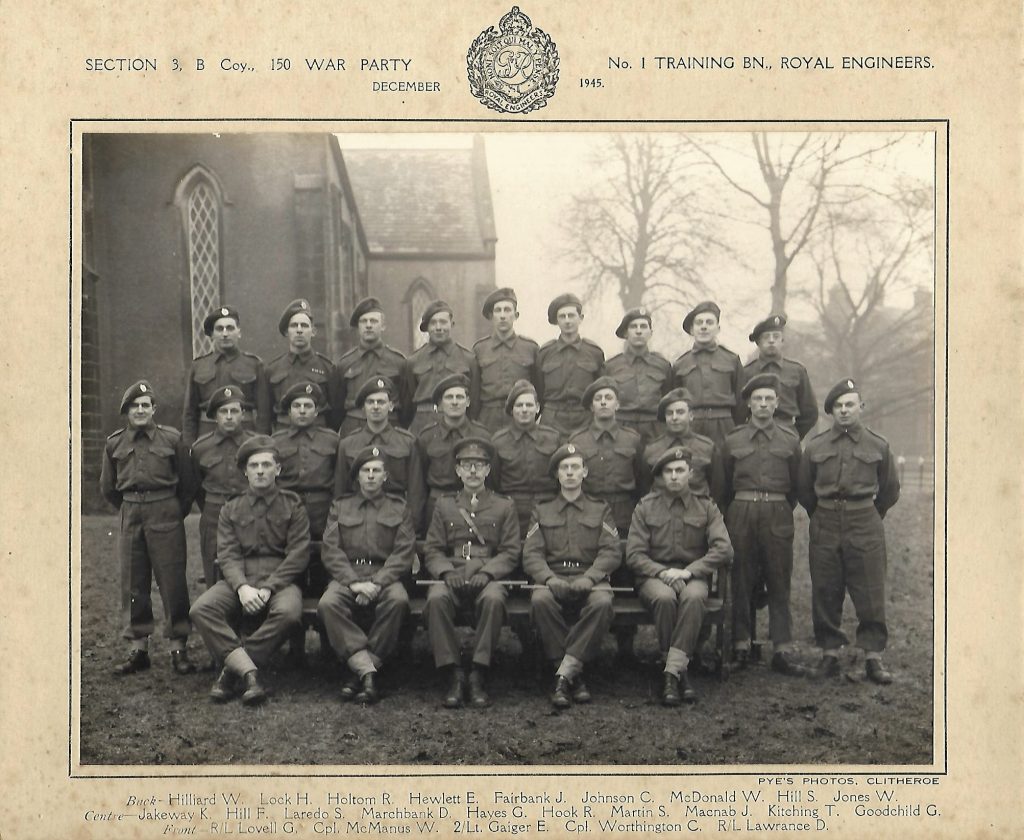
He was in Section 3 of the B Company, 150 War Party, No. 1 Training Battalion of the Royal Engineers. Willie identifies the two men left and right of the senior officer in the front row as their trainers. The formality of the men’s expressions suggests a commemoration of their passing their training. Willie’s allocation to the Royal Engineers would have come about because he had already studied one year of architecture at the Glasgow School of Art when he was called up.
A further group photo, unfortunately undated but with signatures on the back, shows Willie and company at Chatham, where the Institution of Royal Engineers continues to be located to this day.
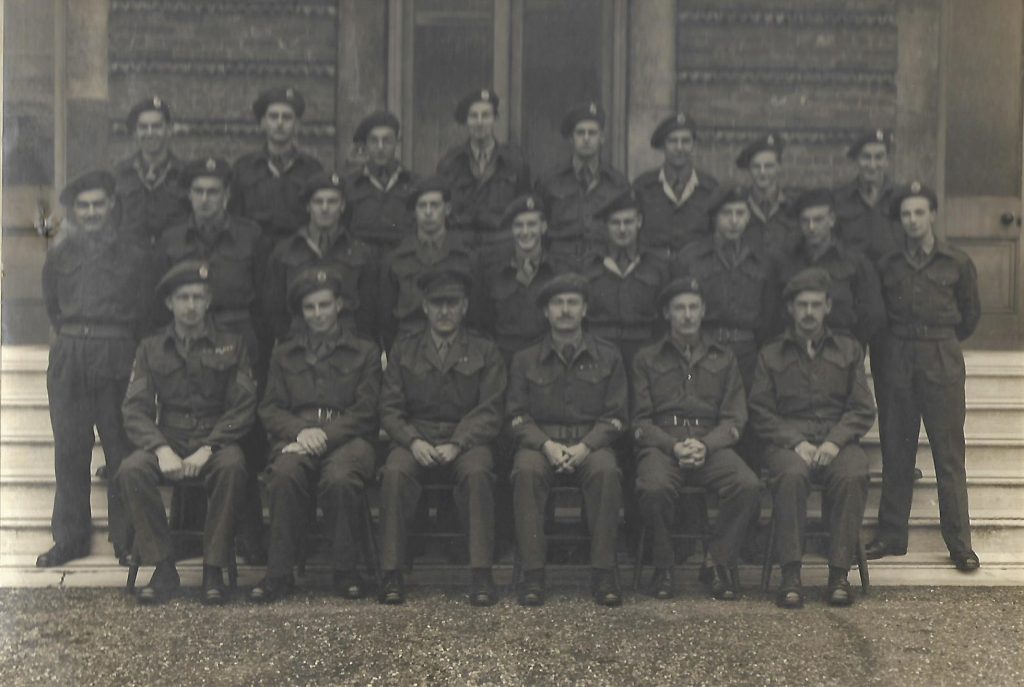
This is a new group of fellow Engineers, some smiling this time, more of a unit now perhaps? There is a clue that these are the twenty-two comrades who Willie will serve alongside in Germany in the presence here of one Bill Gurr (second row three from right). He will not only be Willie’s best friend during his time abroad, he will also in time become his brother-in-law when Bill’s twin brother Arthur marries Willie’s older sister Irene, and he will be best man at Willie’s own wedding to Bunty in 1954.
In general, relieved of the unpleasant prospect of having to take part in destruction and armed combat, Willie seems to have enjoyed the camaraderie of his time in the Engineers, particularly once he arrived in Germany.
He remembers having been involved in the construction of Bailey Bridges, probably with pontoon elements, though he says he never actually built any in Germany.
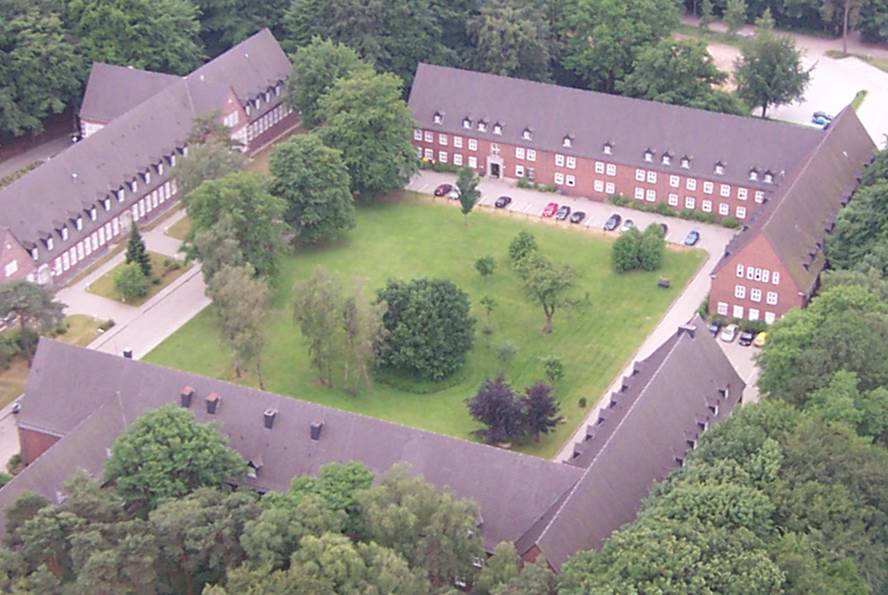
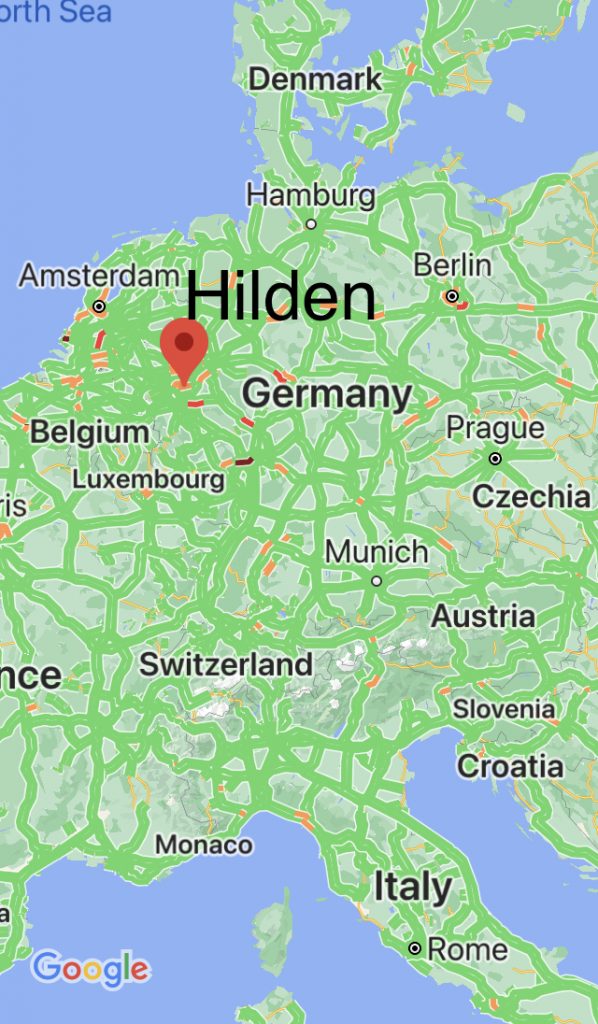
His battalion was accommodated in the “Waldkaserne” or “Forest Barracks” on the edge of the small town of Hilden, located roughly halfway between the cities of Dusseldorf and Wuppertal in the industrial northern Ruhr area of Germany.
https://commons.wikimedia.org/w/index.php?curid=44792025
Completed in 1938 for the National Socialist (Nazi) Troops in the area, the Waldkaserne had been surrendered to liberating US Forces before being allocated to the British Army of the Rhein (BAOR) on 15 July 1945 as part of the division of Germany into occupation zones.
Hilden as a town had largely escaped the horrific flattening by Allied bombing raids suffered by large cities like Berlin and Dresden.
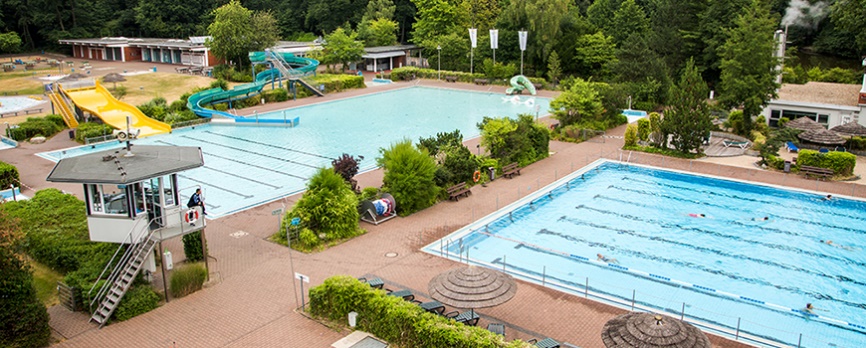
Not far from the barracks there was also the requisitioned Waldbald or “Forest Outdoor Swimming Pool”, a place where Willie seems to have spent many a happy hour when not on duty. The high diving boards got good use when he was around.
https://www.anzeiger24.de/hilden/waldbad-hilden
Edith McDonald estimates that her brother returned home around 1948. It’s a valuable reminder of the strong work ethic required of those returning from National Service at that time that Willie took up a job at the Housing Department by day while continuing his architecture degree at the same time. After four years of evening classes and completing Art School assignments on a drawing board propped up on an easel in his bedroom, Willie finally graduated from Glasgow School of Architecture on 4 June 1952.
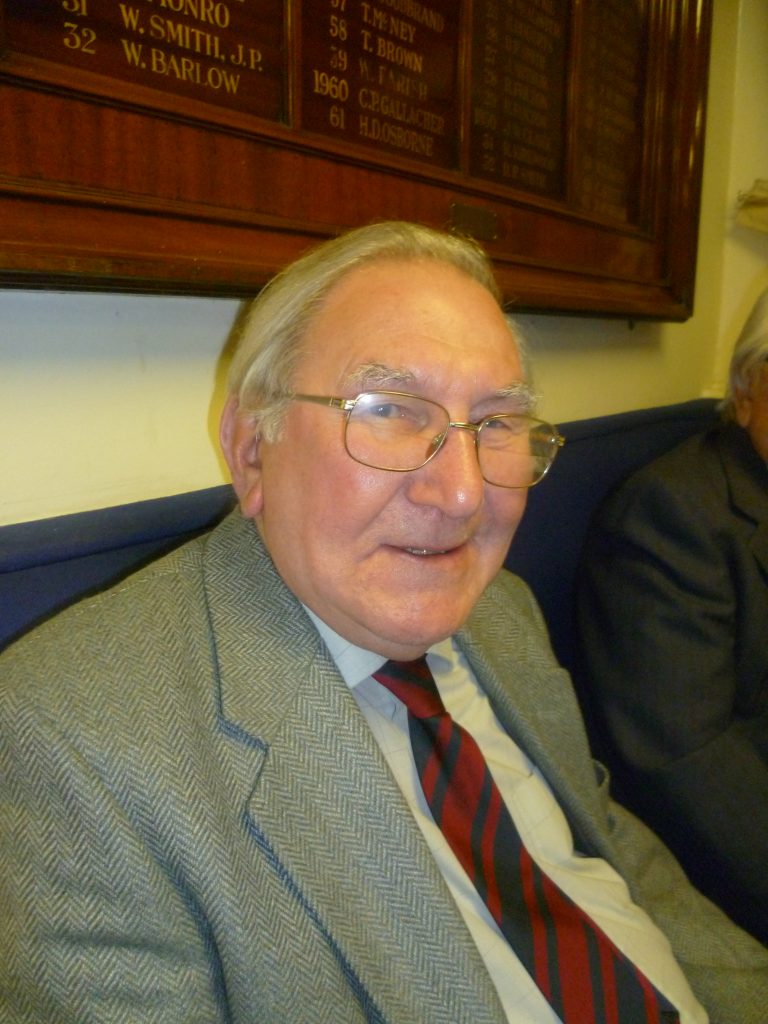
Willie a piper had played in Pipe Bands all of his life, including Rutherglen (along with Alex MacIver and Gus McDonald), Helensburgh & Clan Colquhoun Pipe Bands. He was also a regular attender of the Piping Club in Glasgow.
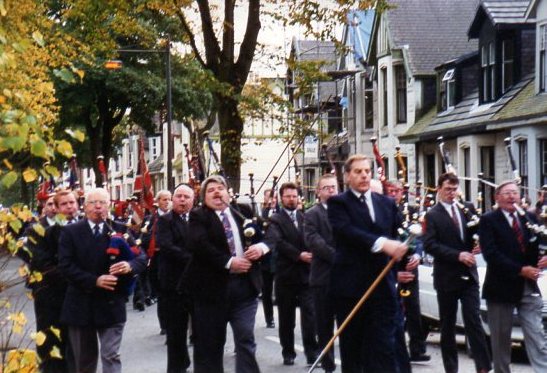
Lifelong friendships were made within the 214, especially with Tom McColl and Gus McDonald ‘The Three Amigos’, as seen here in March 1943.
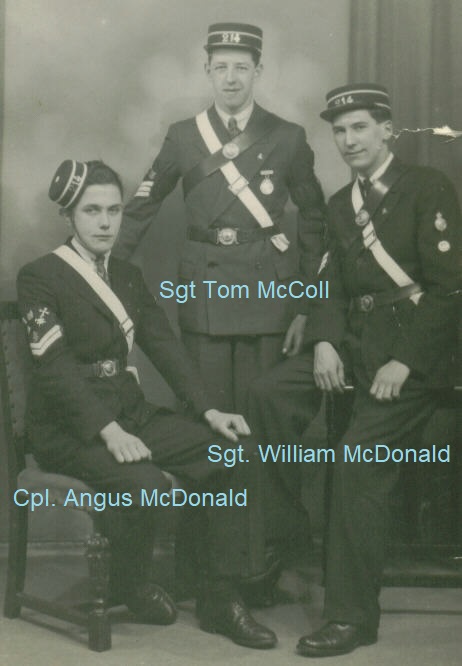
Willie wrote a great summary of his time in the 214 and BB life during the war years, this will be covered in a separate post.
Sorry to advise that John McCarron passed away very peacefully In Perth Royal Infirmary on Wednesday the 28th October 2020, aged 83.
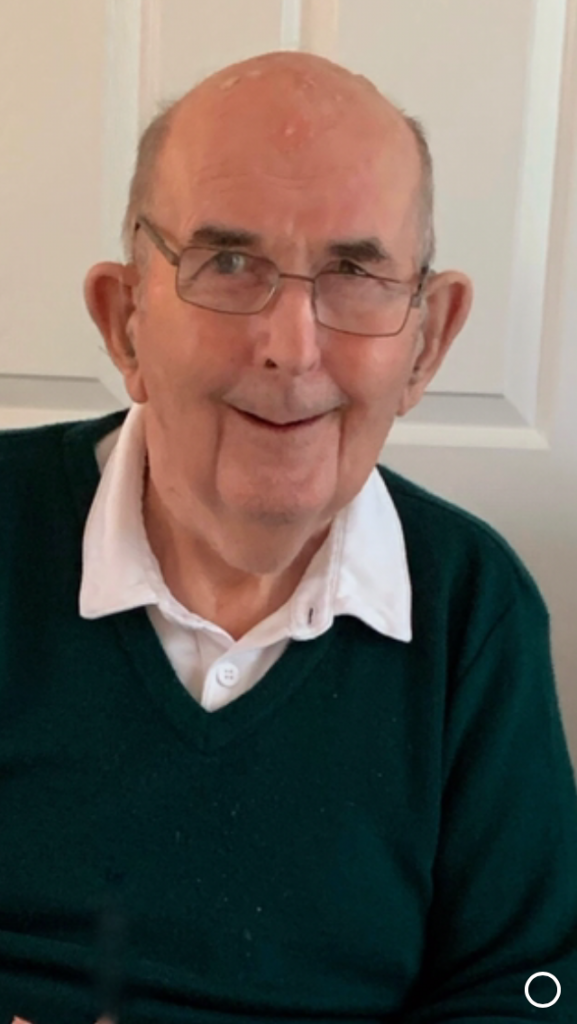
John was Principal Teacher of Chemistry and Assistant Rector at Perth High School. He then became the first Rector of the new Dunblane High School He took early retirement in his fifties due to ill health. In recent years he did not have the best of health.
John’s wife Jean advises he always spoke fondly of his days in the 214.
John and Jean have three of a family, John, Margaret and Kathryn and three grandchildren, Sarah, Sean and María. He was very proud of them all. John also has a sister Mary.
I’m sure all the Ex Members send their condolences to the family at this sad and restrictive time.
As the clock strikes 11am today on this unique Remembrance Sunday, many will stand in silence on their doorsteps due to the intervention of the Coronavirus.
We all remember as 214 boys, standing, usually on that dreich Sunday morning about to parade along to Gordon Park from Bowling Green Rd, frozen to the core.
The older amongst us will remember parading up to the Cenotaph at Victoria Park, prior to the building of the Clydeside Expressway.
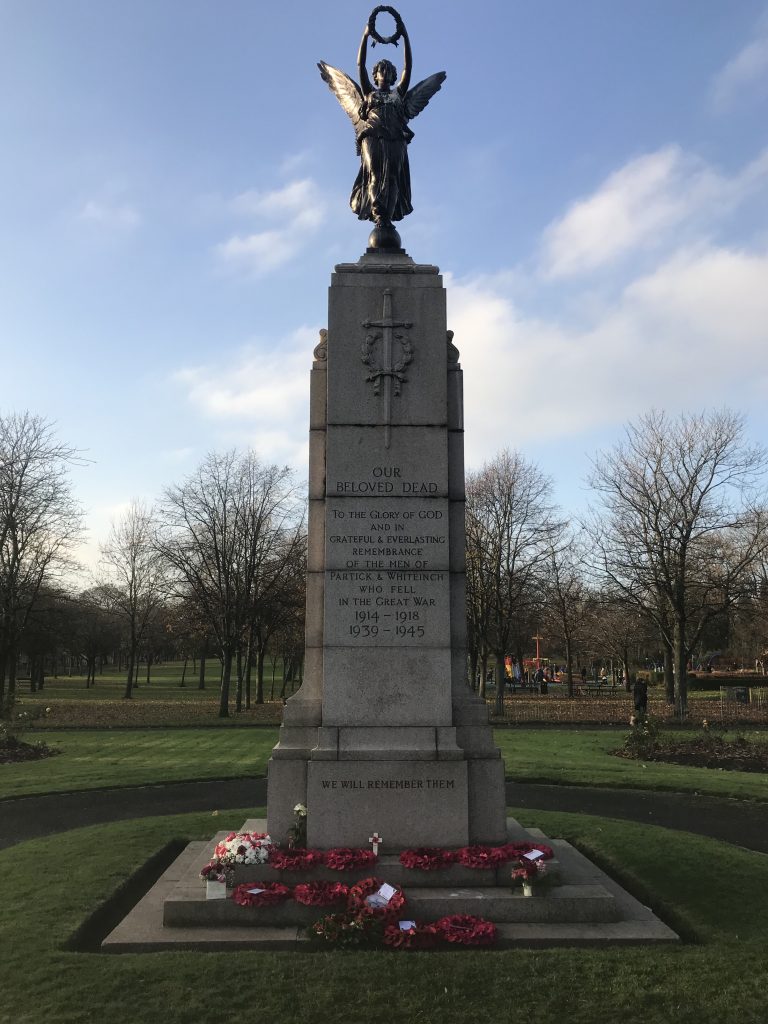
My Grandfather Malcolm McColl, who served with the Royal Field Artillery at Ypres (Flanders fields & The Battle of Passchendaele), had the honour of parading with the Congregation of Gordon Park up to the Cenotaph. He was the church wreath bearer for many years, with his son Tom McColl (Cameronian Rifles, Singapore, Malaya), taking over from him on his passing.
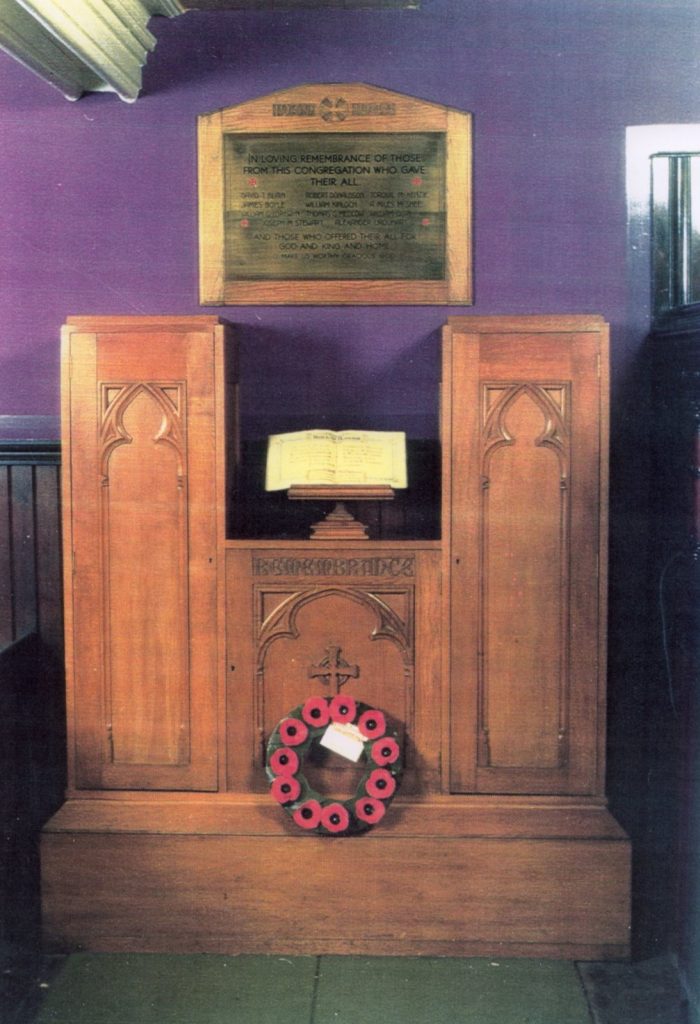
We remember sitting upstairs on the BB pews, while Alex MacIver played Flowers of the Forrest in the distance, after the wreaths had been placed at the church memorial.
The youngest amongst us not really understanding the true meaning of those remembrance services and the older ones thankful they never had to endure what their fore-bearers had gone through.
We will remember them.
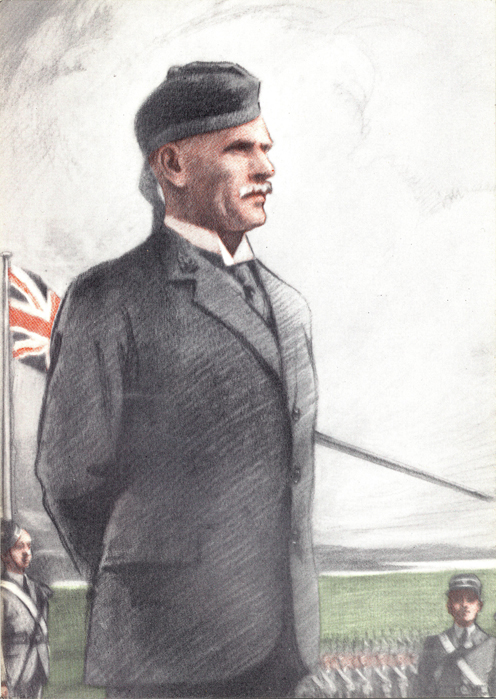
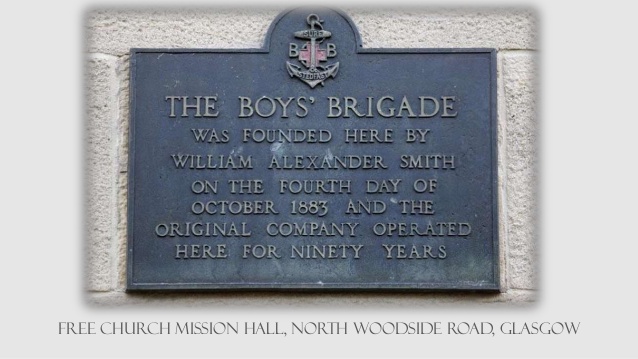
On 27th October 2020, The Boys’ Brigade is celebrating Founder’s Day. This is the birthday of Sir William Alexander Smith.
The day celebrates that Sir William Smith founded the Boys Brigade, 137 years ago in 1883 in North Woodside Road, Glasgow.
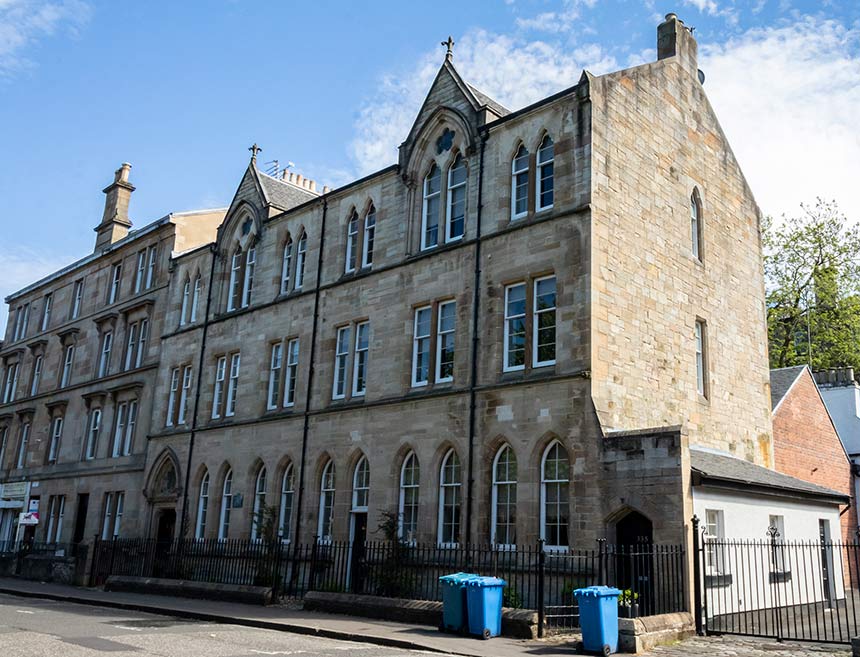
214 FACT:- Did you know Stephen the 214 Ex Members Treasurer, once owned and ran his business office from these premises?
Please click this LINK to read today’s Boys Brigade publication.